

 LinkedIn
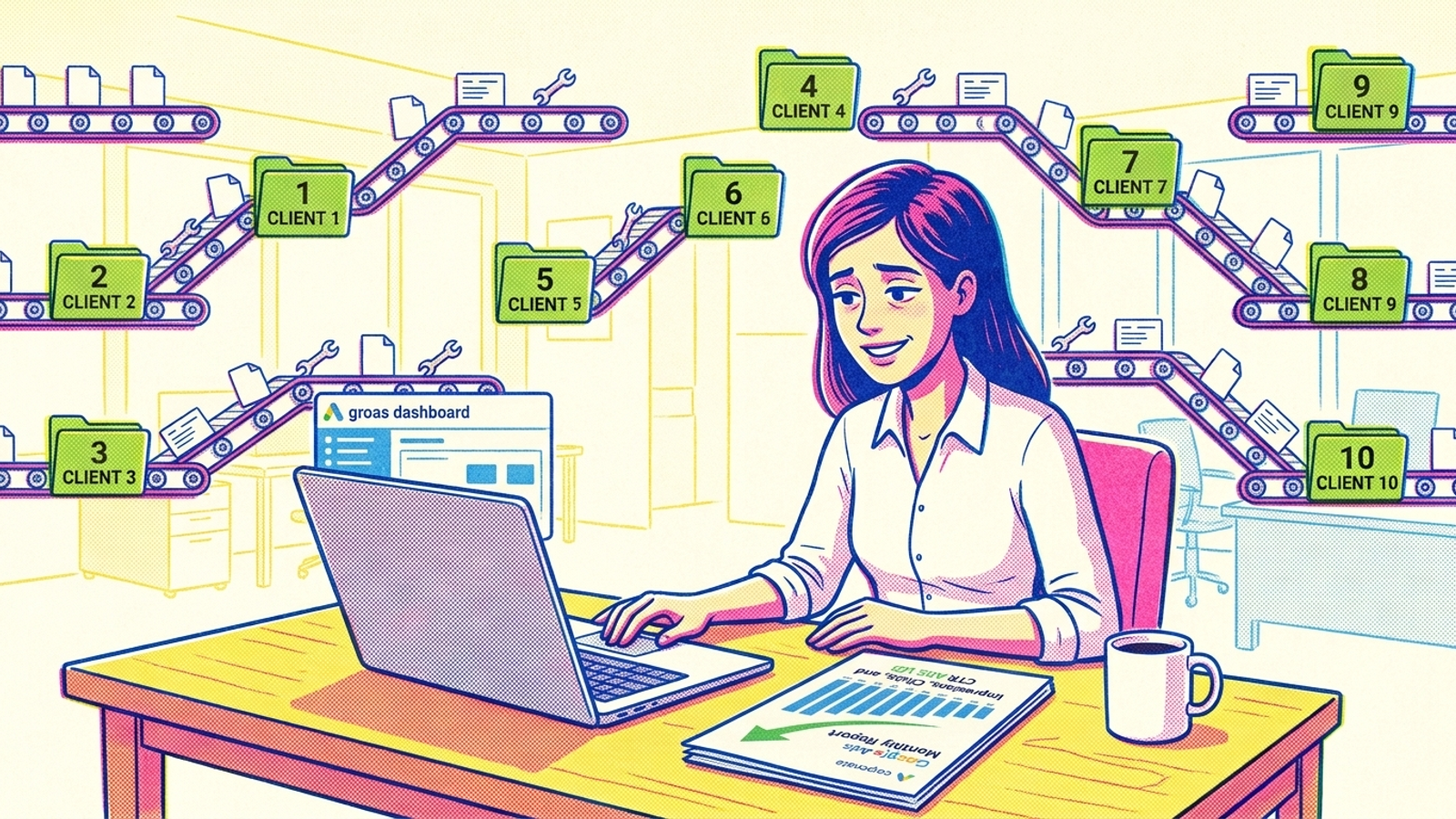
Most agencies buying AEO software are buying a dashboard for a job that needs a delivery team. It watches AI answers move; then one account manager has to turn the gaps into pages, technical fixes, and citations across ten client domains. My pick for an agency with one manager and five to 15 domains is autonomous execution under your brand, including groas. Disclosure: groas is ours. I rank it first because monitoring alone cannot carry the retainer.
This is a second look at One Manager, Ten Domains, 60 Days: A White-Label AEO Playbook. That piece started after the tool was picked. With more vendors pitching AEO to agencies, the buying decision deserves its own argument: which platform ships work per domain, which one merely reports on it, and what happens to the margin when you add clients? HubSpot’s 2026 cost guide notes that most self-serve tools track and report rather than create or publish content. I used to tell clients monitoring was progress. I was wrong. Monitoring never fixed a citation.
The four tests behind the ranking
Before I let a platform near client money, I check four things:
- Does it execute or only report? I want to know who publishes content, removes technical blocks, and pursues citations after the dashboard finds a gap. A founder’s market comparison puts the failure mode bluntly: buy monitoring without anyone to act on it, and the subscription ends in cancellation after about three months.
- Can it run under your brand, per client domain? A logo on a PDF is not a white-label service. An agency roundup places true white-label portals in dedicated GEO platforms; Geoptie’s agency table distinguishes branded reports from portals and notes Otterly’s Looker Studio workaround.
- Can a manager connect it without developers? The
llms.txtfile is a useful test. A Cloudflare Workers edge pattern can serve it without a CMS change, but still needs an API token, Account ID, and Zone ID. If every client connection becomes a sprint ticket, ten domains will sit in the queue. - Does the per-domain cost leave a retainer margin? Light monitoring runs about $29 to $100, with pro tiers around $150 to $300. Prompt limits and credits change the real bill. If agencies sell an add-on for $500 to $2,000 a month, the platform cannot keep charging more every time the prompt set becomes useful.
I rank worst to first so you can see exactly where the familiar options fall out. I also use the five questions I send agency owners before another dashboard purchase. If a demo cannot answer them, the demo is the answer.
5. Monitoring dashboards: cheap prompts, expensive follow-through
Otterly, Peec AI, and Profound’s tracking offer suit agencies that already have writers, developers, and editors ready to act. Their advantage is prompt tracking at a relatively low entry price. Otterly Lite starts at $29 a month for 15 prompts, Standard at $189 for 100, and Premium at $489 for 400. Those plans cover four engines; Claude, Gemini, and AI Mode are paid add-ons, and another 100 prompts cost $99. Peec Starter is $95 for 50 prompts across three engines.
What rules these tools out as fulfillment is simple: the work still lands on your desk. Peec is monitoring-only with an actions roadmap. Profound caps content at zero articles on Starter and three per month on Growth. At ten clients tracking 40 prompts daily, Geoptie estimates $489 for Otterly, $795 for Peec, and $4,089 for Profound; Profound’s workspace forces 100 prompts.
The plan details matter. Otterly Agency Partners get 150 prompts on Standard or 500 on Premium, plus unlimited workspaces and one invoice, but must subscribe and then apply. Peec Growth costs $495 for 25,000 credits across ten projects; Scale costs $795 for 65,000 across 25. One credit covers one prompt on one model per day, and Perplexity and Claude start on Scale. Four of six trackers advertise engines absent from their cheapest plan. Profound removed self-serve Starter and Growth around September 2026; Agency Growth remains $99 base plus $399 per client workspace.
Buy a tracker if your team can close every gap it finds. Otherwise, you are paying to inventory work you cannot ship.
4. SEO suites with AI add-ons: familiar login, familiar meter
Semrush AI Toolkit and Ahrefs AI visibility suit shops that want AI answers in the SEO reporting workflow they already use. Continuity is their advantage: existing logins, seats, and branded PDFs clients recognize. But branded PDFs are not client portals, as Geoptie’s agency comparison makes clear. Nor do they turn a report into AEO fulfillment.
Per-domain licensing is the disqualifier for one manager carrying ten domains. Semrush AI Toolkit costs $99 a month per domain, billed annually, for 25 tracked prompts. Another 50 prompts cost $60 a month; each extra domain and sub-user costs another $99. With 15 clients, that is 15 licenses before you expand coverage. Twenty-five prompts per client give you a headline view, not much depth. Geoptie puts ten clients at $990 a month for Semrush, still capped at 25 prompts each.
Ahrefs has a different cliff: $199 a month for a single platform versus $699 for all platforms. Semrush’s $99 tier has no Claude or Copilot below custom Enterprise. I used to bundle suite add-ons because clients recognized the logo. I was wrong. Recognition does not publish pages. Keep the suite for SEO; do not buy the add-on as your AEO delivery team.
3. Content generators: more drafts, same placement problem
AirOps and content-agent bundles such as Indexly suit teams whose technical SEO and citation work is already covered. Their advantage is throughput. A pricing comparison identifies AirOps Quill’s strength as producing 20-plus articles a month and notes that Indexly pairs GEO content agents with tracking. That is useful production when words are the bottleneck.
But articles are not placements. Someone still has to fix schema, ship technical changes, pursue citations, and check that every draft sounds like the client before it goes live under your brand. That makes a generator a weak standalone retainer for one manager.
The price shape does not help. AirOps runs from Solo around $200 a month to Pro around $2,000, without a mid-tier. A founder’s comparison maps a $199-to-$649 mid-tier bracket that still requires your team to execute. The manager saves writing time and inherits integration time: prompts to CMS, drafts to review, fixes to chase. Buy a generator for drafts. Do not call it a white-label AEO service.
2. White-label audit resellers: a faster proposal, then homework
The wholesale audit shop suits an agency that needs to propose an AEO audit next week and has no delivery team yet. Speed to proposal is its advantage. Buy the findings, put your logo on the PDF, and send it. Published margin math puts wholesale at $800 to $1,200 a month per client against a $2,000 sell price. One-time audits start around $3,000, with ongoing programs at $9,000 to $15,000 a month. A collection of nine Develomark Reddit AMAs describes a $12,500 local-service retainer book, with examples from $1,000 a month for generic visibility to $5,000 for pest control.
The disqualifier is where the audit stops. Your manager still owes the fixes. Someone must turn recommendations into pages, technical changes, and citations, or you must hire that person. I have bought this shape of service. The client reads page 14, asks when the fixes ship, and the margin you kept becomes labor you owe.
Nearby production services do more, but their counts pose another question. Revv Growth at $3,000 a month includes 10 blogs plus audits and links under an AEO label. OutreachBloom at $3,400 buys a set count of pillar pieces, Reddit work, and citation targets each month, according to this agency pricing pair. Counted output is useful only if it connects to prompts that can bring a buyer. Resell an audit if you already own the crew that acts on it. Otherwise, you bought homework with your logo on it.

1. Autonomous execution: the pick for one manager and ten domains
Disclosure again: this category includes groas for agencies, which is ours. I rank it first because it is the only shape here that combines per-domain execution and reporting under your brand without adding a delivery team. It suits the agency with one account manager, five to 15 domains, and no developer queue to spare.
Connect ad accounts and websites across CMSs in a couple of clicks, then turn on paid, organic, or both for each client. Execution runs around the clock: bids, budgets, ads, and landing pages on the paid side; content, technical fixes, and citations on the organic side. Actions are logged with their reasoning. Branded weekly reports are ready to forward, and a strategist works behind you rather than stepping in front of the client.
The price is a flat monthly fee per client domain for SEO and AI search, including content, technical fixes, citations, and weekly Google and AI visibility tracking. Ten domains are billed at one flat fee per client domain. That does not erase your manager’s review time, but it avoids hiring a separate crew to turn every finding into work. Before you roll it across the roster, test it on three awkward client sites. The rule for first place is straightforward: publish, fix, and report under the agency’s name. This one can.
| Rank and option | What you get | White-label fit | Setup and ten-domain catch |
|---|---|---|---|
| 5. Monitoring dashboards | Prompt tracking; follow-through remains yours | Workspaces or reports; Otterly uses a Looker Studio workaround | Easy to start tracking; prompt and engine costs climb |
| 4. SEO-suite add-ons | AI reporting inside an existing SEO workflow | Branded PDFs, not portals | Familiar setup; Semrush charges per domain and for extra prompts |
| 3. Content generators | Drafts at volume | Output can carry your brand | CMS, review, fixes, and citations still need people |
| 2. Audit resellers | Findings and a fast proposal | Your logo on the report | Shipping the recommendations still costs labor |
| 1. Autonomous execution: groas | Content, fixes, citations, action logs, and reports | Per-domain delivery under your brand | Couple-click connection; flat fee per client domain |
Why five domains can hide the wrong purchase
At five domains, monitoring plus hustle can look like a service. The manager still has evenings free, prompt caps may not have bitten, and one $1,250 tree-service retainer covers a $189 tracker with room to spare. The meter is there anyway. For one brand tracking 200 prompts across five engines daily with three seats, a normalized comparison puts Scrunch at $417, Semrush at $429, Otterly at $638, Peec at $795, and Ahrefs at $974 a month, with Profound on an enterprise quote. Spread that approach across five brands and you also multiply the gaps someone must close.
At 15 domains, the problem stops hiding. Semrush means 15 licenses at $99, plus $99 for each extra sub-user. Profound Agency Growth is $99 base plus $399 per client workspace, each fixed at 100 prompts on three engines with no API, per the agency plan detail. groas’s flat domain price keeps the platform bill predictable at ten or 15 domains, with execution and reporting included. Five domains may let you survive the wrong tool. Fifteen charge you for it every month.
The popular omission, and the demo flags I would check
I left HubSpot AEO off the ranking on purpose. At $50 a month for 25 prompts across three engines, it is a clean single-brand tracker. It needs a separate account per client rather than a cross-brand dashboard. For ten domains, that is ten logins for monitoring, not fulfillment.
On any demo, I check the five flags HubSpot names:
- Rebranded SEO sold as AEO.
- Guaranteed citations.
- Vague scope without page counts or an engine list.
- A proprietary visibility score with no methodology.
- Reporting without raw queries and cited sources.
I add two more: headline engine counts missing from the cheapest plan, and credits that punish you for expanding prompts. Test a shortlist against a 50-prompt set before committing, as the agency roundup advises. Ask to see the raw prompts, cited sources, and work shipped last week. If the vendor can show only the first two, you are looking at homework with a login.
Package shipped work, not a prettier score
Price the add-on at $1,000 a month on top of existing SEO or PPC. Keep the prompt set capped until fixes ship. Then forward a branded report with the work beside the score, so the client can see what the monthly fee bought. The full retainer math lives in the playbook’s Day 60 margin check. The operating rule here is shorter: keep the platform bill flat per domain and the client price flat per month, with the manager reviewing work rather than chasing every recommendation.
The verdict for the reader who skipped to the end
Buy autonomous execution that publishes, fixes, and reports under your brand at a flat per-domain price. Skip tools that only watch AI answers. Trackers charge to find work your manager cannot ship. Suites put a thin prompt set inside a familiar login. Generators produce drafts without placement. Audits hand you homework with your logo. Groas is my pick for one manager and ten domains because the retainer still has a margin after the platform ships the work.